
Real Estate Investment Options Beyond Residential Properties
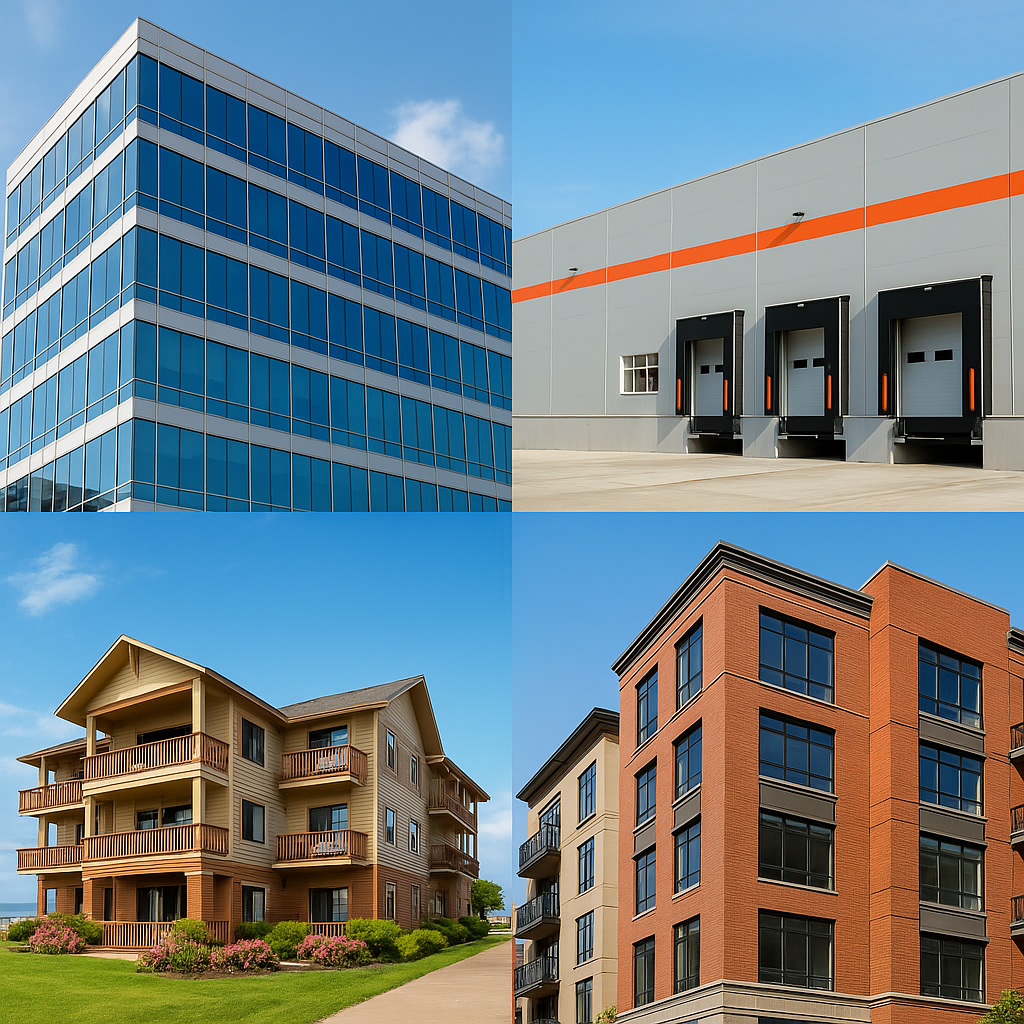
When most people think of real estate investing, single-family homes and rental apartments usually come to mind. While residential properties are a great starting point, the world of real estate offers far more diverse opportunities—many of which provide strong returns, long-term stability, and unique advantages.
Whether you're a beginner ready to explore new options or a seasoned investor looking to diversify your portfolio, here’s a look at the most promising real estate investment opportunities beyond residential housing.
1. Commercial Real Estate
Commercial properties include office buildings, retail stores, medical centers, and shopping complexes. These spaces are leased to businesses rather than individuals.
Benefits:
Long-term leases (often 5–10+ years) = steady cash flow
Tenants typically cover property expenses through triple net leases
Higher potential returns compared to residential properties
Considerations:
Requires larger capital investment
Economic downturns may impact occupancy
Active property management and market knowledge are crucial
2. Industrial Properties
Industrial real estate includes warehouses, distribution centers, manufacturing plants, and storage facilities—an increasingly popular sector due to the rise in e-commerce.
Benefits:
Lower tenant turnover
Simple structures and lower maintenance
High demand due to the growth of online shopping and logistics
Considerations:
Zoning regulations and site access are key
Tenant improvements may be expensive
Some properties are location-specific and harder to repurpose
3. Hospitality Real Estate
This category includes hotels, motels, resorts, and short-term rental-focused buildings.
Benefits:
High income potential during peak seasons
Flexibility to adjust pricing based on demand
Strong tourism markets can yield impressive returns
Considerations:
Highly sensitive to economic changes and seasonality
Requires professional management and high operational costs
Success depends heavily on location and guest experience
4. Retail Properties
Retail real estate includes malls, strip centers, standalone stores, and restaurants.
Benefits:
Long-term leases with established brands
Percentage lease options can grow with tenant success
Strong anchor tenants (like grocery stores) attract foot traffic and other tenants
Considerations:
Retail is evolving rapidly due to online shopping
Some retail assets are declining in value
Market and tenant analysis is essential for success
5. Mixed-Use Developments
These properties combine residential, commercial, retail, and sometimes hospitality elements in one project. Think urban developments where people can live, work, shop, and dine—all in the same location.
Benefits:
Multiple income streams
High demand for convenience and walkability
Often located in revitalized or high-growth areas
Considerations:
Complex planning, zoning, and design
Higher upfront costs
Requires a broader management strategy
6. Healthcare Real Estate
This includes medical offices, urgent care centers, and outpatient facilities. With a growing and aging population, this sector offers stable, long-term investment options.
Benefits:
Long leases with low tenant turnover
Tenants are less likely to relocate due to custom buildouts
Consistent demand regardless of economic cycles
Considerations:
Regulatory compliance is important
Properties may require specialized build-outs and maintenance
Tenant vetting is critical
7. Real Estate Investment Trusts (REITs)
If you want to invest in non-residential real estate without buying and managing physical property, REITs are a great option. Public REITs are traded like stocks and give you exposure to different real estate sectors.
Benefits:
Diversified real estate exposure
Low barrier to entry (start with as little as $100)
Liquidity and passive income via dividends
Considerations:
Market-driven like stocks
Limited control over management decisions
Dividend income is taxed as ordinary income
8. Land Investments
Buying undeveloped land in the right location can lead to significant profits, especially if you plan to develop or resell in the future.
Benefits:
Lower entry cost
High appreciation potential
Minimal maintenance
Considerations:
No immediate cash flow
Zoning and development costs can be significant
Long holding periods may be required
9. Self-Storage Facilities
Self-storage continues to grow in demand due to urban downsizing, life transitions, and small business needs.
Benefits:
Low maintenance compared to other asset types
Recession-resistant and consistently in demand
Flexible lease structures with monthly contracts
Considerations:
Initial buildout can be expensive
Competition is increasing in many markets
Effective marketing and occupancy management are key
Final Thoughts
Real estate investing extends far beyond the residential neighborhood. Whether you’re looking for passive income, long-term appreciation, or portfolio diversification, non-residential real estate offers a wide range of opportunities to match your investment goals.
By exploring sectors like commercial, industrial, healthcare, and mixed-use properties, you can tap into new income streams and potentially reduce risk through diversification. And if you're not ready for direct ownership, REITs offer a low-maintenance way to start investing in large-scale real estate projects.
📌 The key is research, due diligence, and choosing the investment strategy that aligns with your resources, timeline, and financial goals.